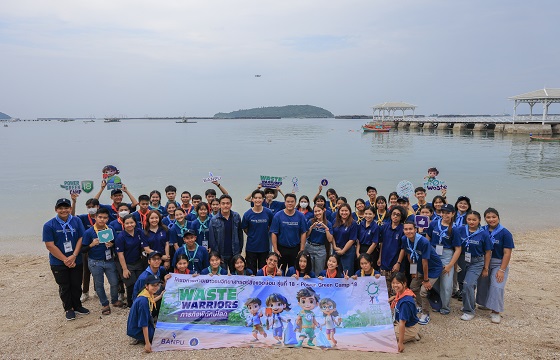
Banpu & Mahidol launch Power Green Camp 18 ‘Waste Warrior – Mission to Protect the World’

Banpu Public Company Limited, a leading international versatile energy provider, together with the Faculty of Environment and Resource Studies, Mahidol University, furthered its commitment to raise awareness about environmental issues with the Power Green Camp 18. Set under the theme of “Waste Warriors, a Mission to Protect the World with Green Cloud – Green Tech – Green Influencer”, the Power Green Camp was held on October 15-21, 2023.

This year, 335 students from 181 high schools and vocational schools in 63 provinces across the country applied to join the ‘Power Green Camp’. The application process required each applicant to create a campaign video clip for “trash-free communities” for which a total of 50 finalists from 48 schools in 30 provinces were selected to join the camp.
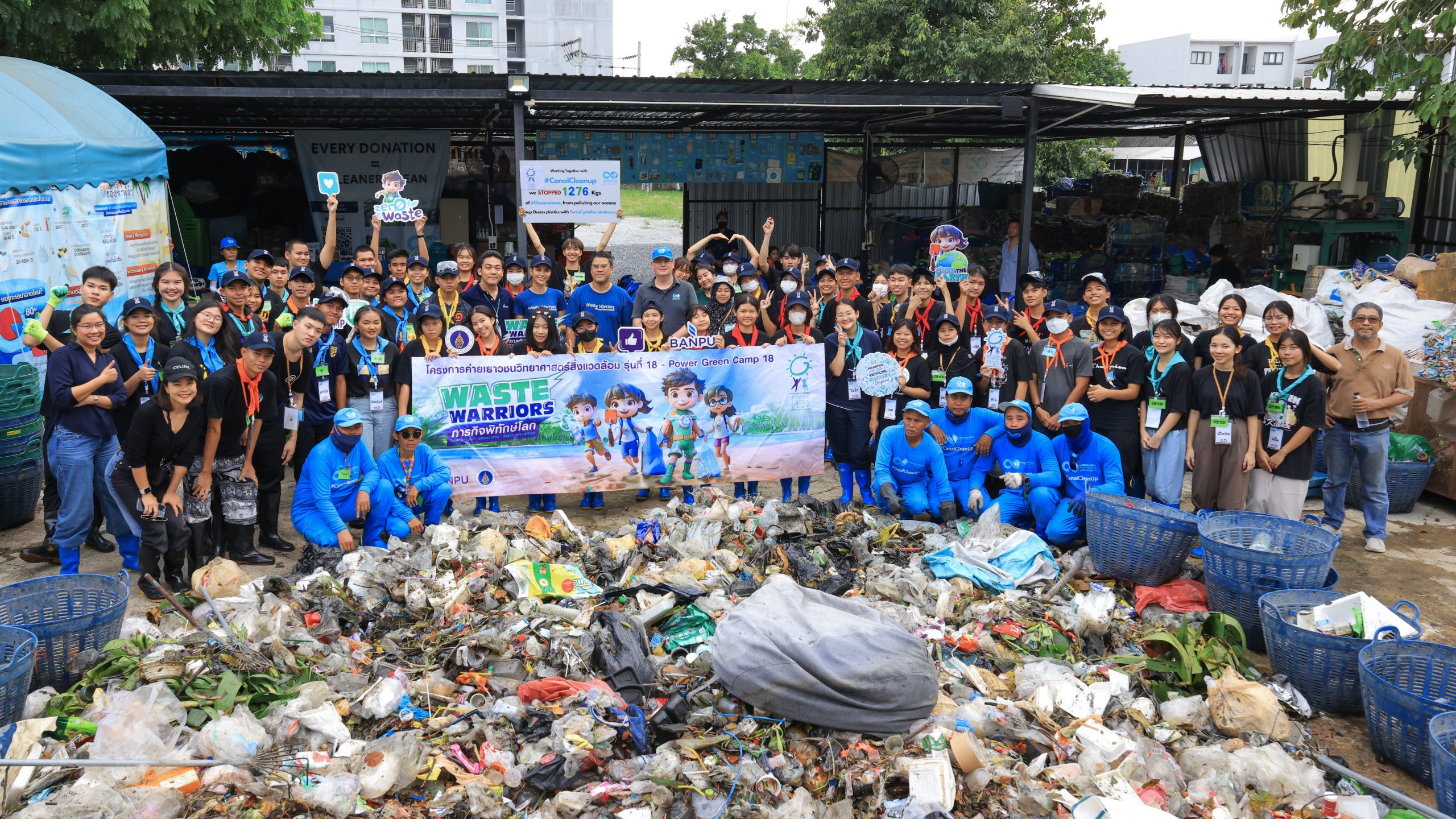
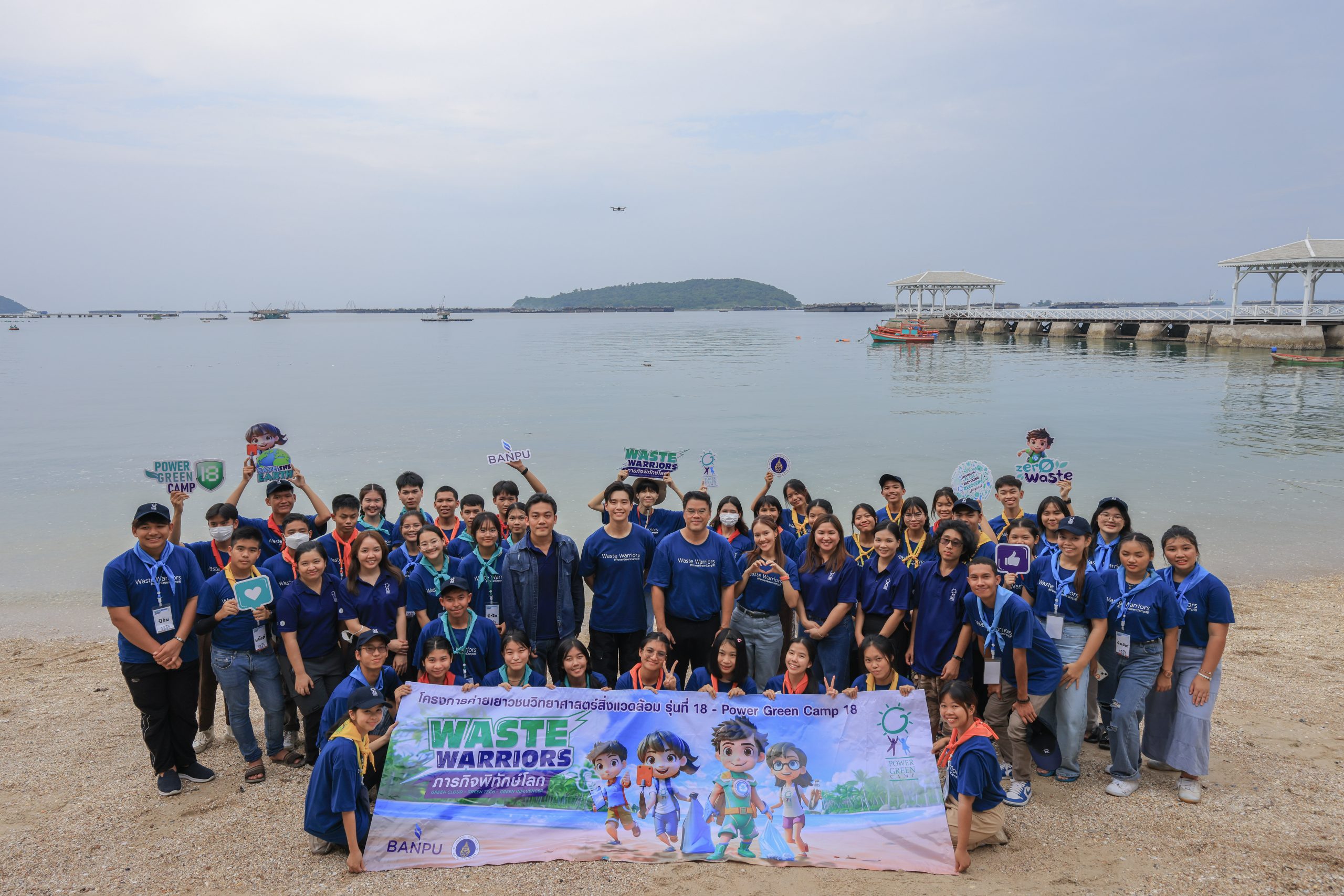
Science beyond the classroom; laying intensive theorical foundation

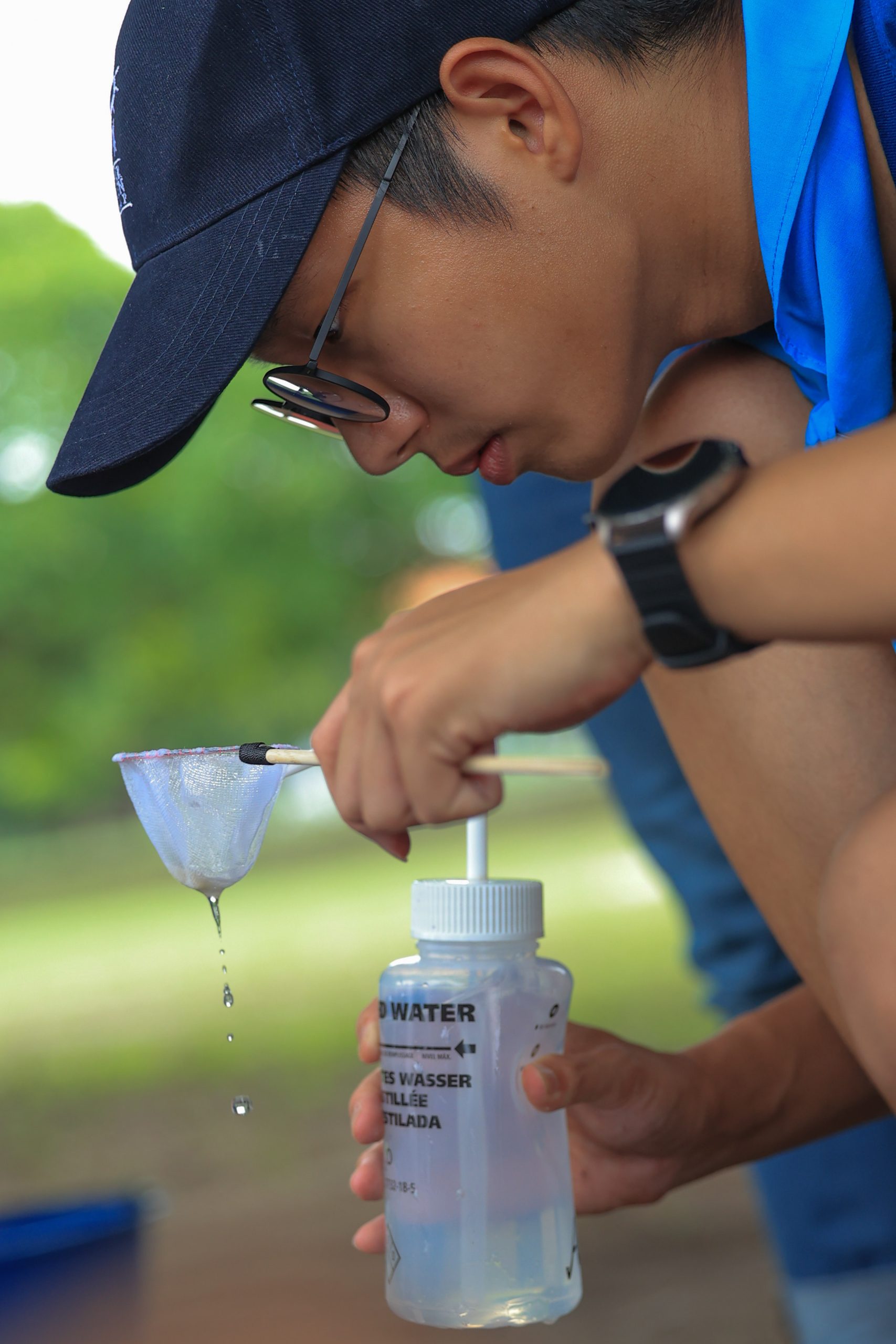
The Power Green Camp put its focus on designing learning activities that align with the concept of “Environmental Science – Learning to Practice.” The camp kicked off with science classes aimed at establishing a theoretical foundation and enabling students to understand  the root causes and comprehensive end-to-end waste management. The class also brought in 3 green trends – Green Cloud, Green Tech, and Green Influencer – and demonstrate how to apply them for the benefit of various activities within the camp. Some interesting topics included understanding the life cycle for waste management and Geographic Information System (GIS), a process of working with spatial data using a computer system to manage waste problems. The team behind “Go Green Girls”, an environmental influencer group, joined the camp to teach students on creating social media content. They shared techniques and experiences of advocating various environmental agendas to the public. This aims to pave the way for the young generation to become “green influencers,” with the hope that their small voices could create significant changes in the future. The students also worked in group to develop environmental science projects based on what they had learnt throughout the camp.
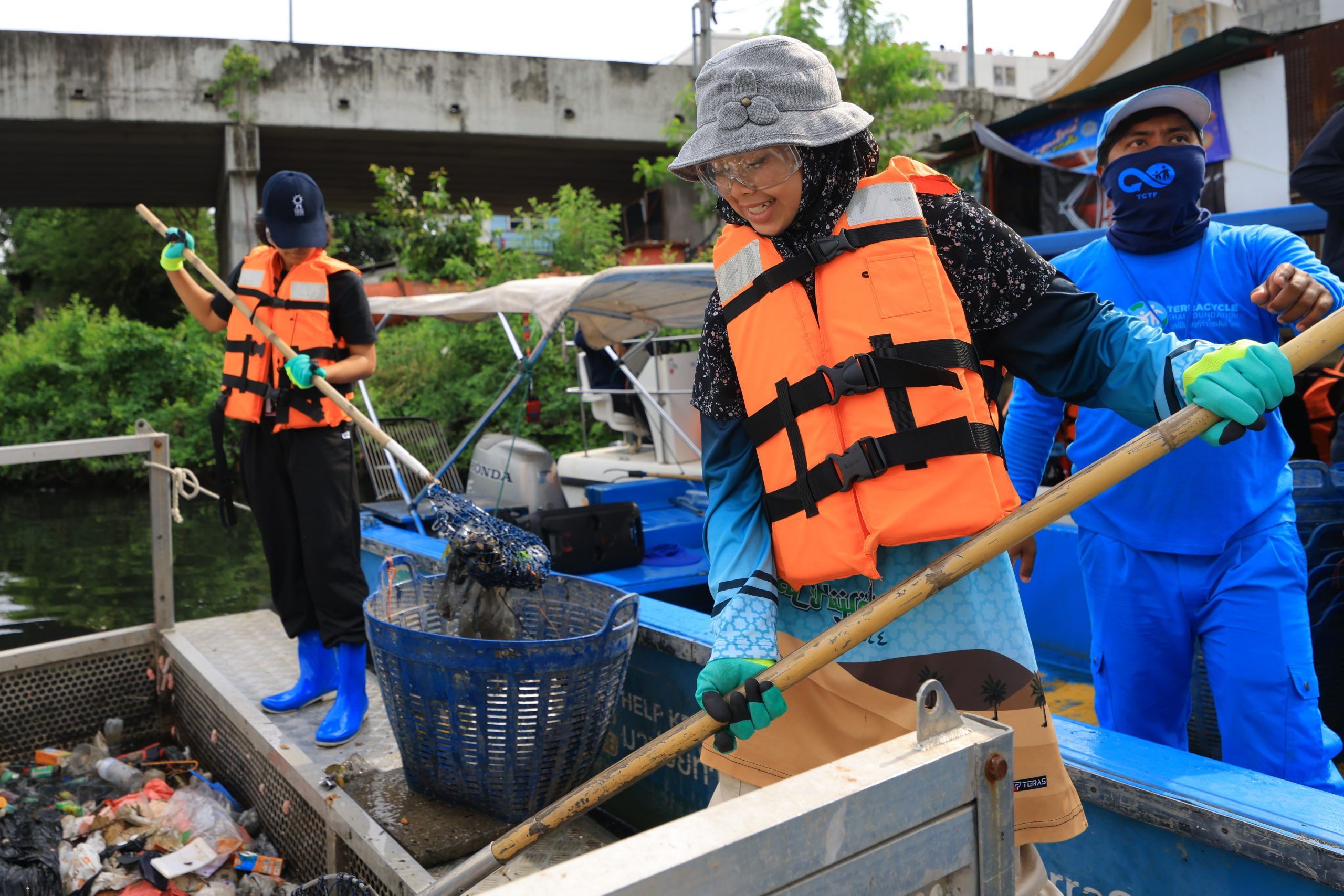
Hands-on experience working in the field, exploring problems, and identifying solutions

  • Collect, sort, and manage waste

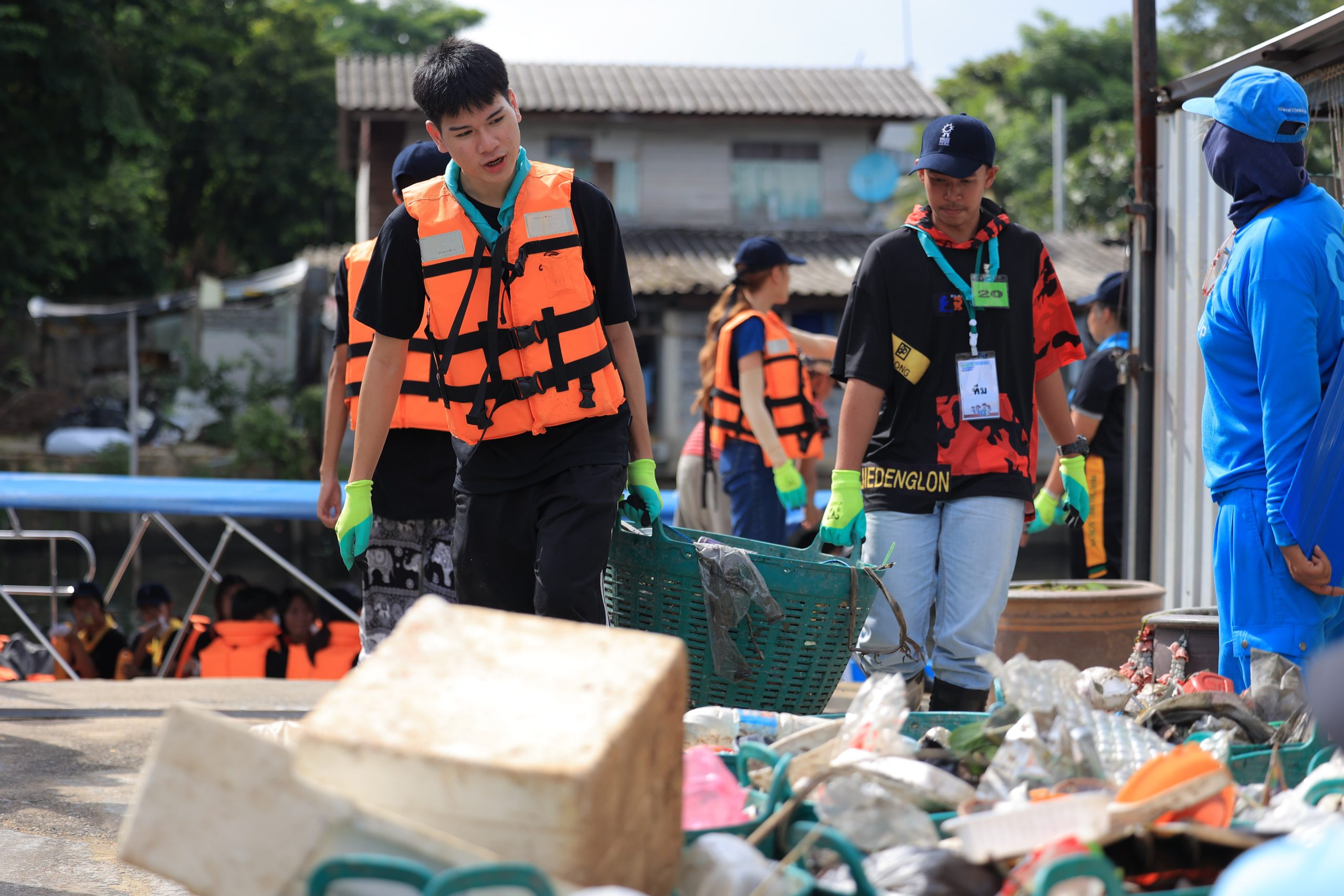
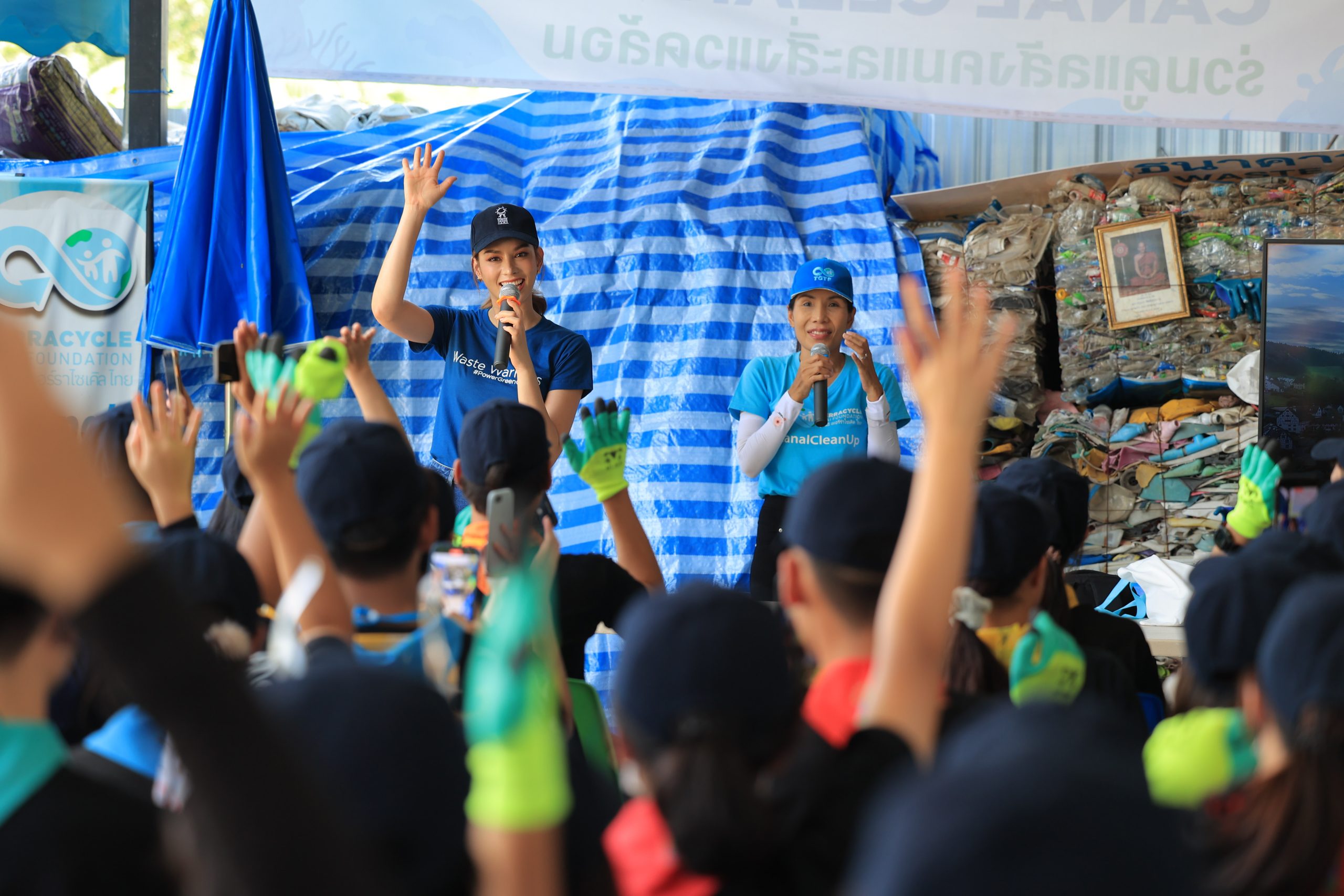
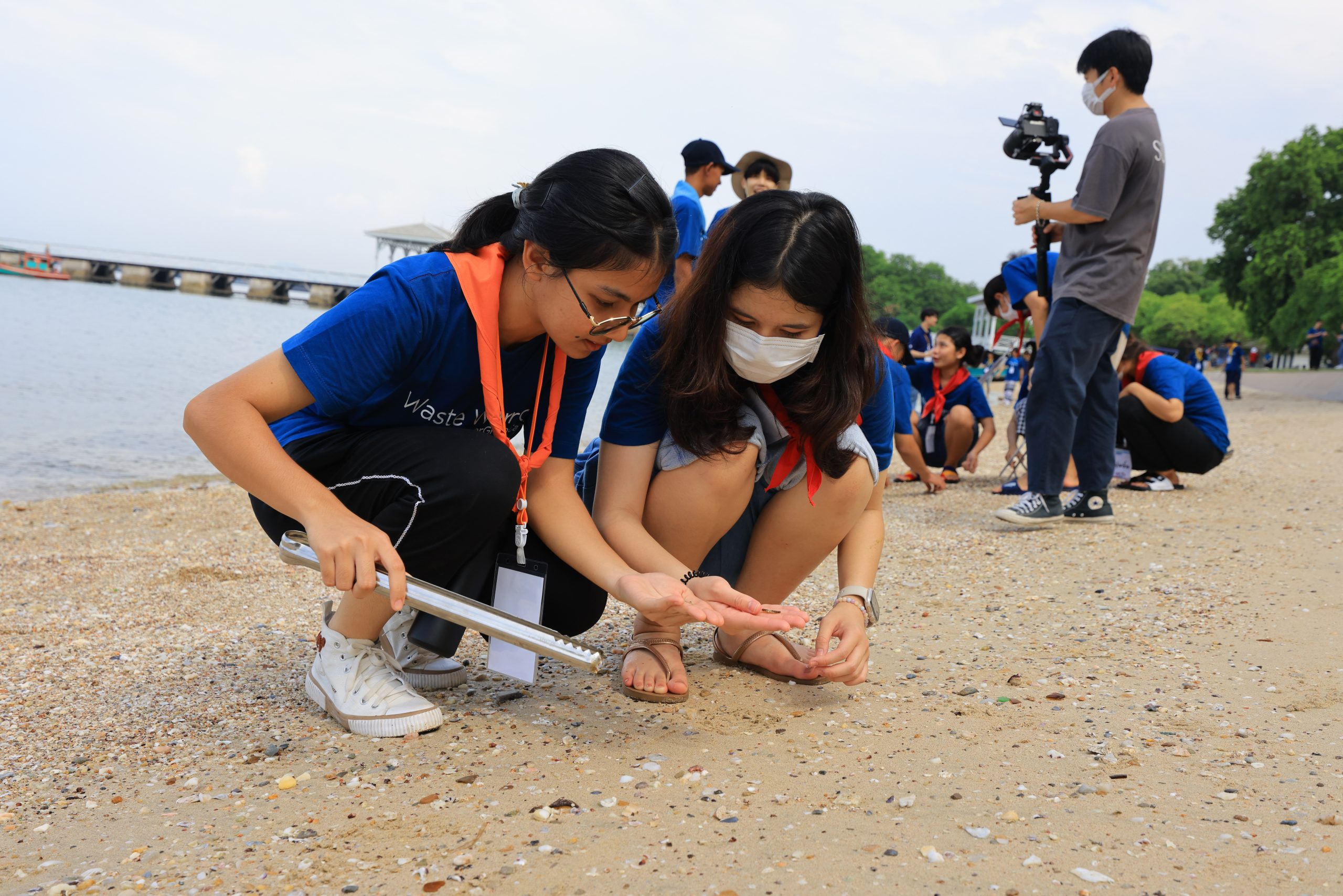
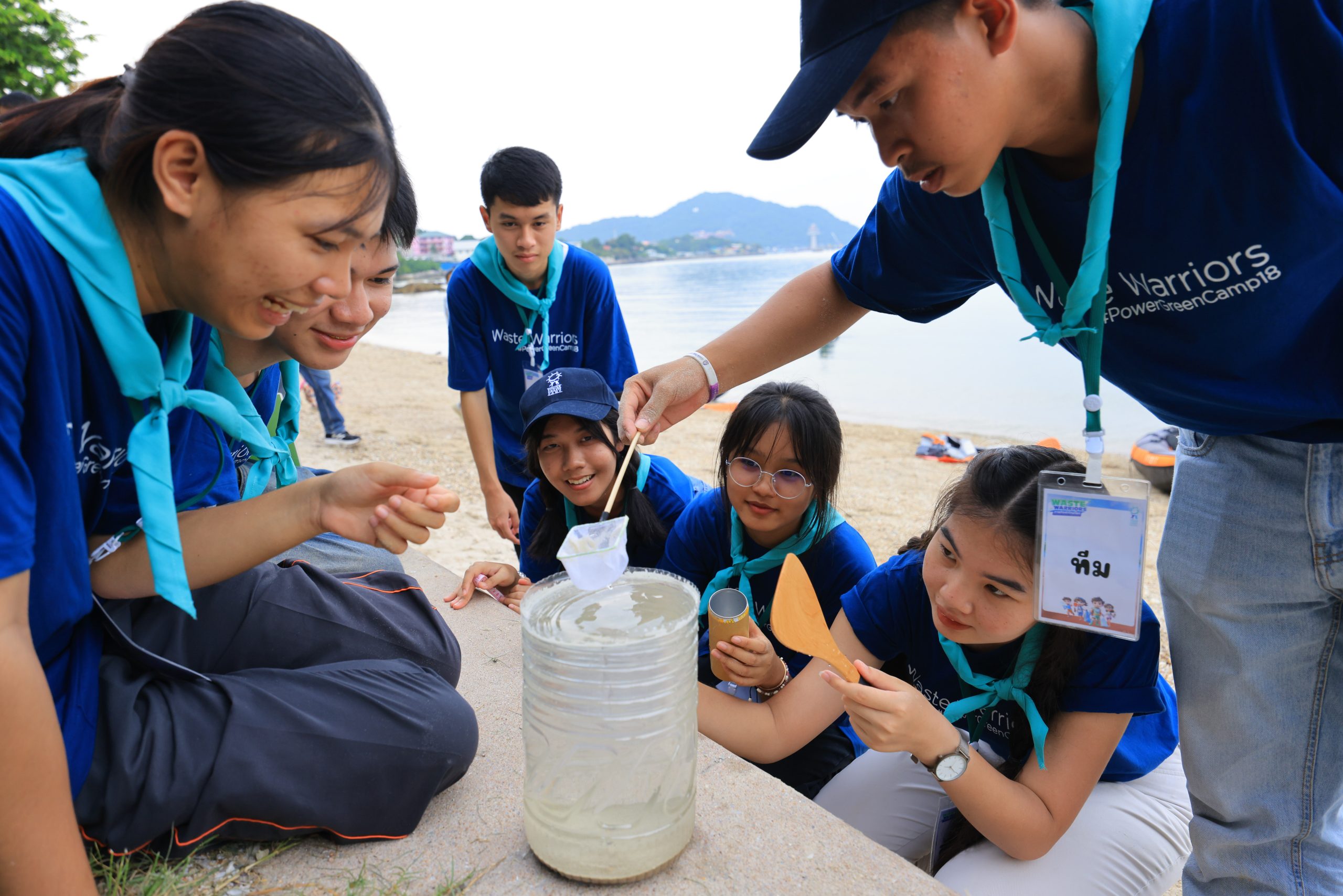
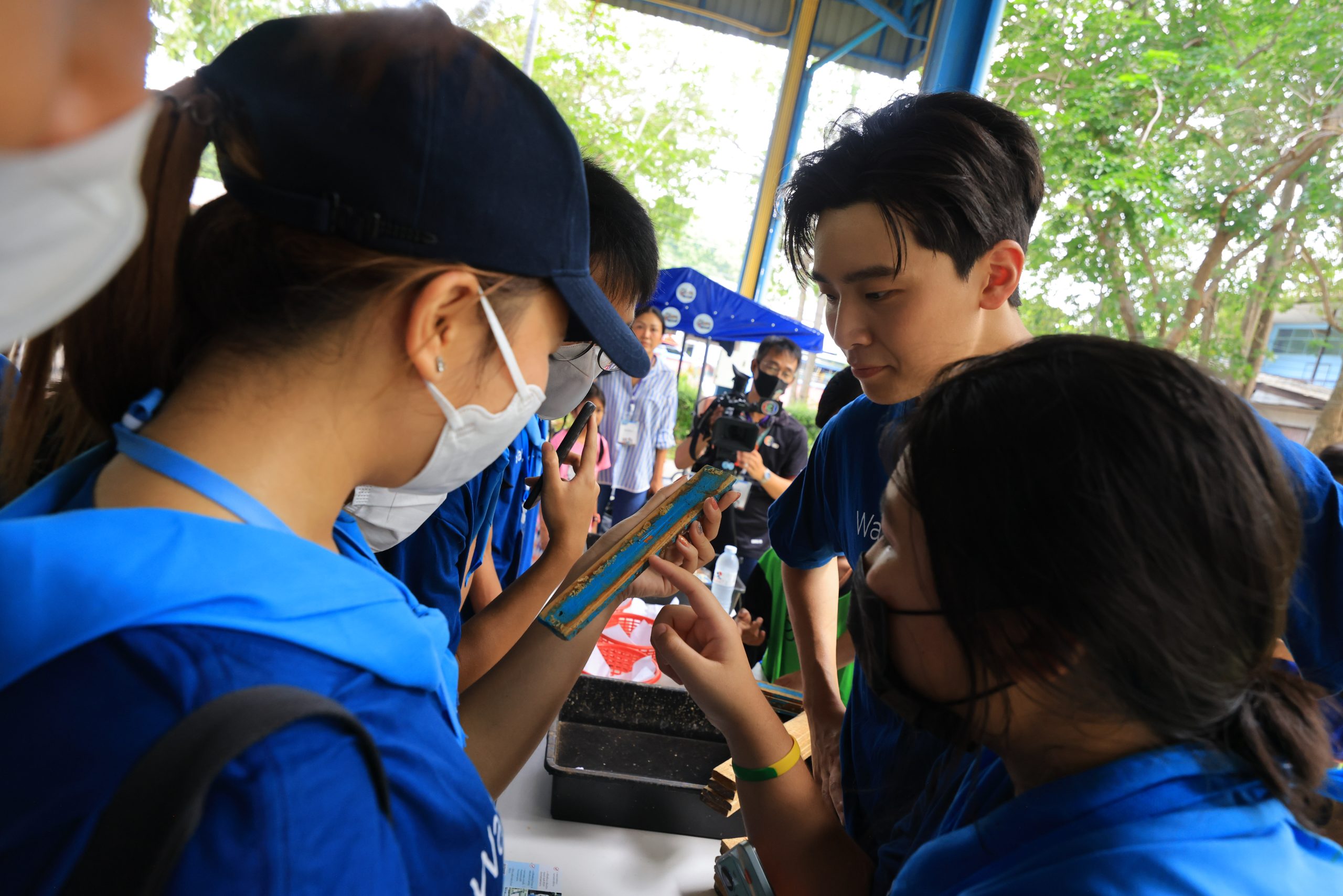
50 students went to a field trip to study various problems and solutions to waste management. The camp, in collaboration with the TerraCycle Thai Foundation, took the students on boats to explore waste problems and collect garbage in the Khlong Lat Phrao community area – right in the heart of Bangkok. They learnt how to segregate wastes before entering the proper waste management process. Anna Sueangam-iam, Miss Universe Thailand 2022 and a ‘Magic Hand Ambassador’ who represented the ‘Mai Te Ruam’ (Do no mix food waste) campaign, a waste management project under the cooperation between BMA’s Department of Environment and the Magic Hand project alliance, joined the activity with all students to help drive awareness of environmental issues. Students also participated in a ‘sea trash survey’ activity, collecting trash on the beach and learning more about the contaminated plastic waste at Koh Si Chang, Chonburi Province alongside a well-known environmental enthusiast actor Neng Sarun Naraprasertkul and a pop singer Earth Patravee Srisuntisuk.
  

  • A field trip to observe the production process of high-quality food-grade recycled plastic resin.

Students also studied technology and production process of high-quality food-grade recycled plastic resin in Rayong Province. The process involves sorting, cleaning, and recycling to produce plastic pellets which contributes to an annual reduction of up to 60,000 tons of plastic waste in the country.
     

  • Visit thecommunity and learn how to manage ‘organic waste’.

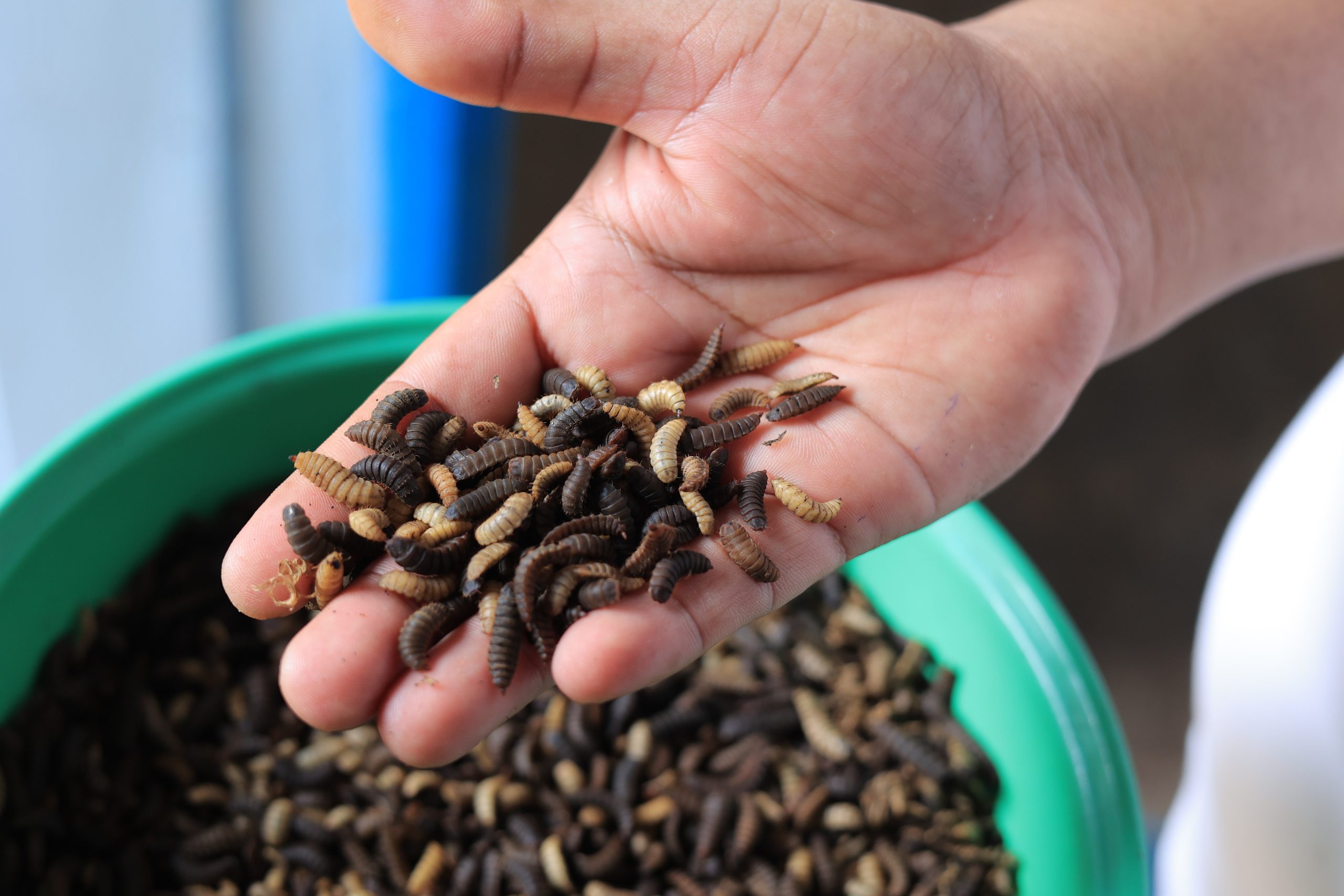
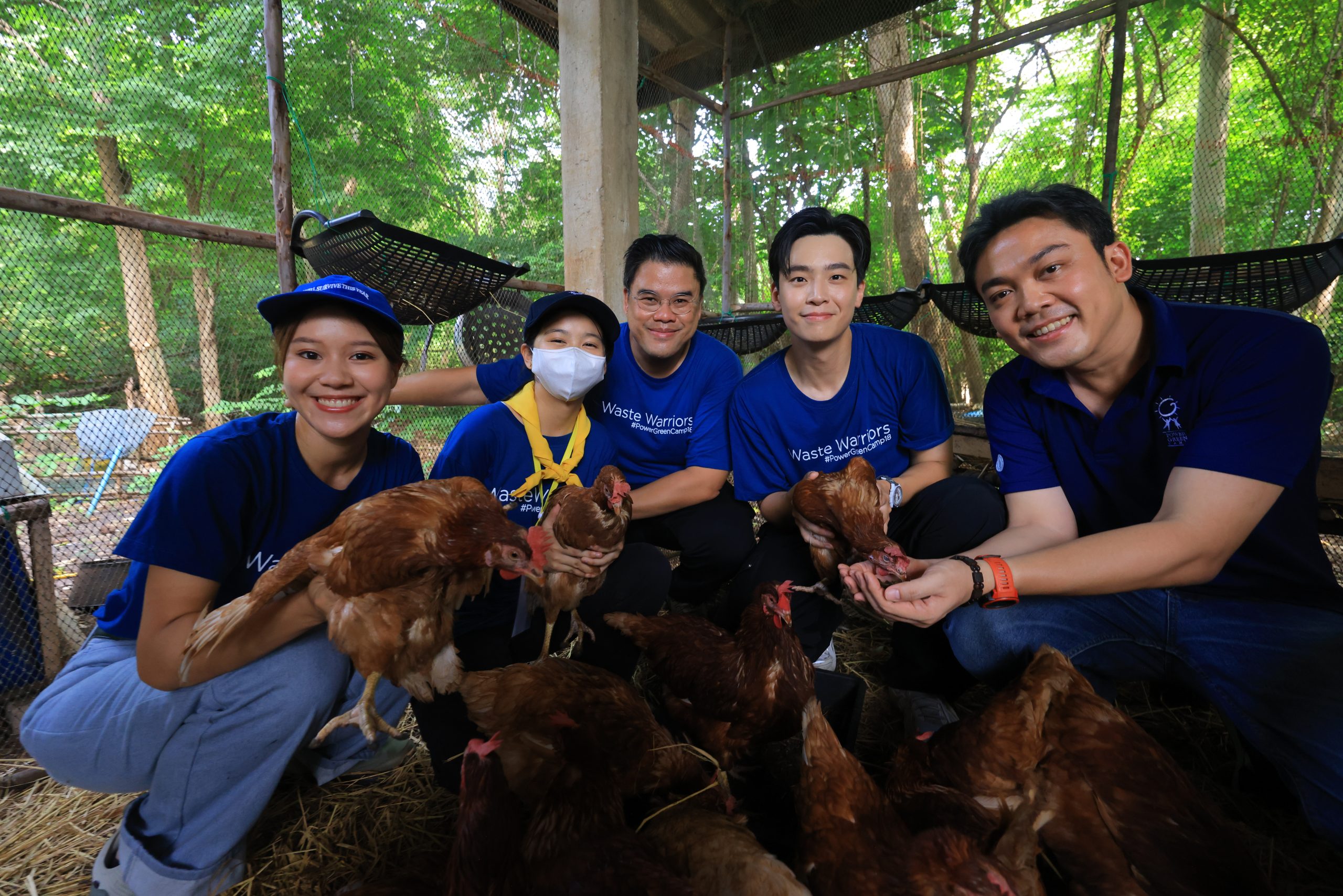
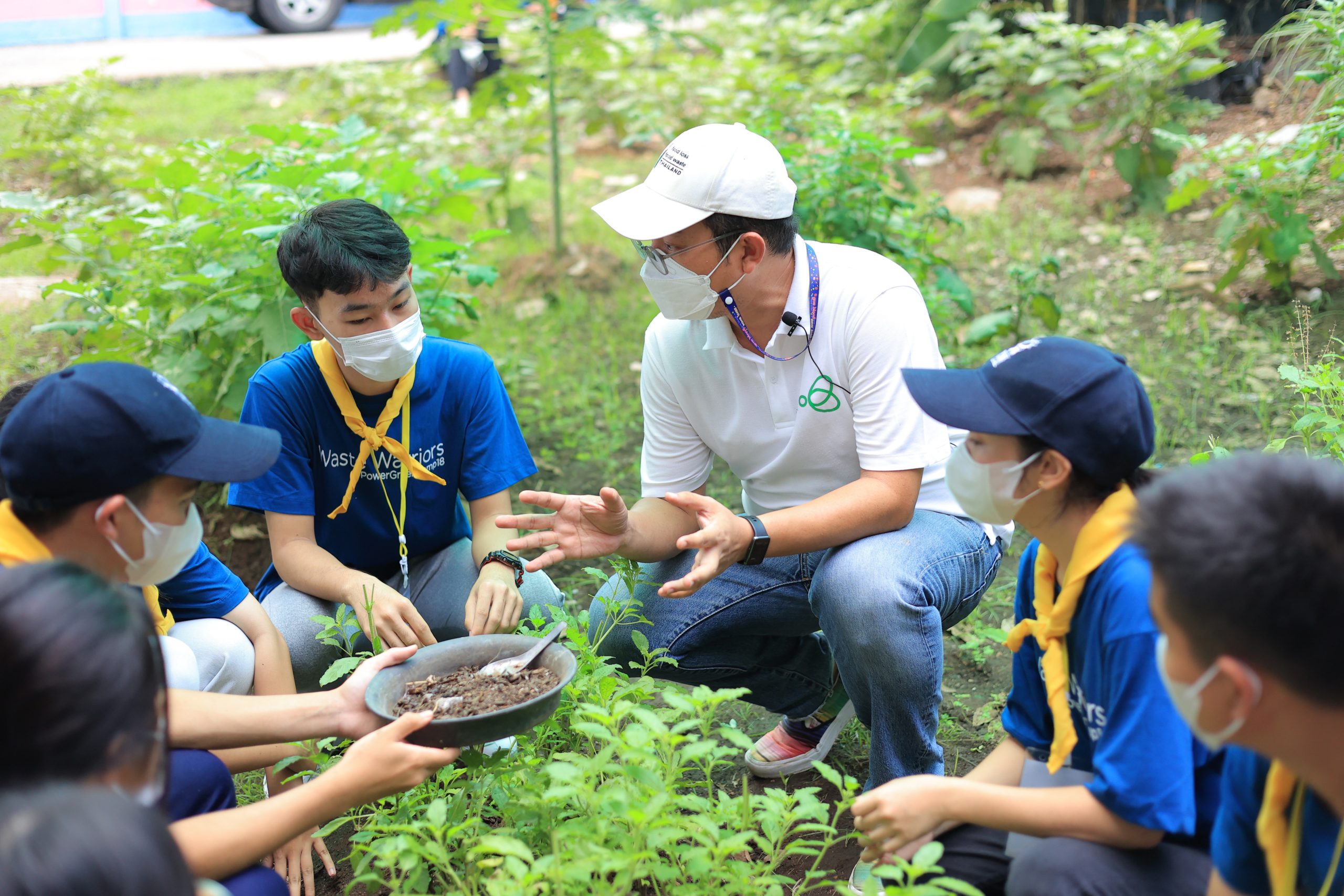
To enhance awareness about waste management, students also learned methods for handling ‘organic waste’ and participated in an activity with “Betterfly”, one of the social enterprise from the 10th Banpu Champions for Change (BC4C) project. BetterFly is a project that helps manage leftover food waste in the community by using Black Soldier Fly (BSF) as aid in the decomposition process before transforming it into environmentally friendly products. The initiative aims to reduce the landfill of organic waste and promote a circular economy within the community. Since the project began, almost 7,000 kilograms of organic waste have been successfully managed in the Koh Si Chang community.
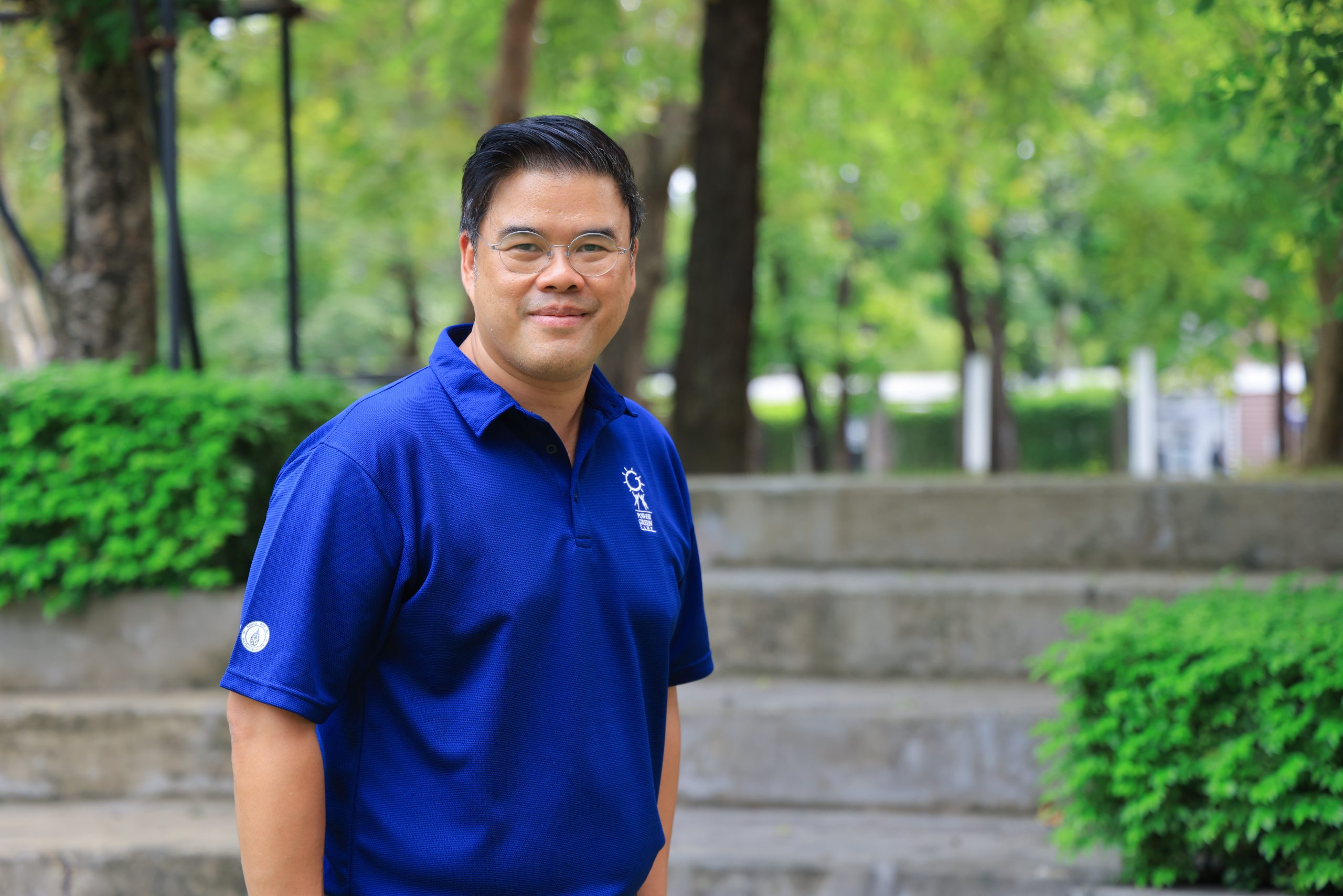
Mr. Rattapon Sukhunthee, Head of Corporate Communications, Banpu Public Company Limited, said “The Power Green Camp has been running for 18 consecutive years. Banpu aims to enhance the depth of the camp’s learning content in line with environmental trends. We are proud to have students who are interested in environmental issues and are ready to dedicate themselves to being leaders who contribute to driving awareness of environmental issues and finding solutions to such problems. We hope developing and empowering these 50 students will build future youth leaders and an environmental youth network who can play a crucial role in advocating for environmental protection, restoration, and participation in solving environmental problems for the community, the country, and eventually solving the problems in the international level.”
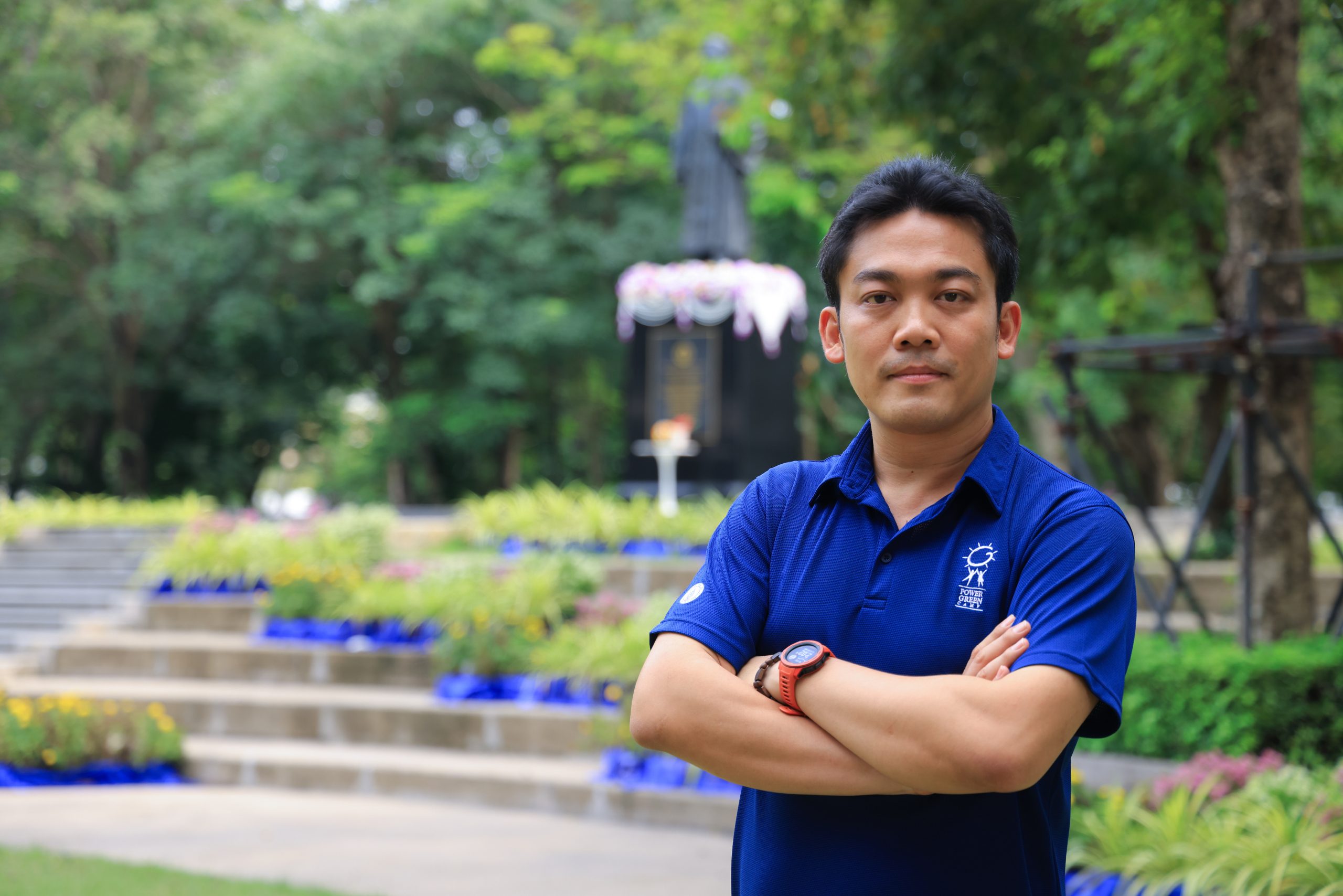
Assistant Professor Dr. Kritana Prueksakorn, lecturer at Faculty of Environment and Resource Studies, Mahidol University, and president of the Power Green Camp 18, said “Waste problem in Thailand is intensifying day by day at every stage of the life cycle of all type of waste. A significant example is residual waste. Thailand is ranked among the top 10 countries in the world that emit the most plastic waste into the sea. Participation from the public sector is one of the keys factors in addressing such challenges. This year, Power Green Camp has chosen to focus on waste management and encourage students to become green influencers. This initiative aims to empower individuals who can accurately communicate environmental knowledge in an engaging and captivating manner. We designed both theoretical and practical learning to meet the needs of the new generation concerned about the environment issues. We provide them the opportunity to explore waste-related issues and solutions from upstream to downstream stages with  integrating knowledge of cloud computing technology and environmental science technology to apply to various learning activities in the most diverse, comprehensive, and beneficial way possible. We hope that the selected students joining the Power Green Camp this year have fun with the experience in the camp and are inspired to actively contribute to positive, long-term environmental change.”

For more information and updates on the 18th Power Green Camp at

Facebook: www.facebook.com/powergreencamp

Website: www.powergreencamp.com

Tags :
For more information,
Please contact Banpu Corporate
Communications Team:
Kamolwan Chiamudom

02-694-6994

kamolwan_c@banpu.co.th

Thanatchaporn Rangsinturat 

02-694-6784

thanatchaporn_r@banpu.co.th

Solar Farm
Ponder Solar Farm
Texas

Operational

Capacity
(1Q26)

2.5
MW
Banpu Ownership : 100%
Gas-fired Power Plant (HELE/CCGT)
Temple I CCGT Power Plant
Texas

Operational

Installed
capacity
(1Q26)

768
MW
Banpu Ownership : 100%
Temple II CCGT Power Plant
Texas

Operational

Installed
capacity
(1Q26)

755
MW
Banpu Ownership : 100%
Shale Gas Site
Marcellus Shale
Pennsylvania

Operational

Reserves
(2025)

0.6
Tcfe 1P reserves
Banpu Ownership : 65.94%
Barnett Shale
Texas

Operational

Reserves
(2025)

5.5
Tcfe 1P reserves
Banpu Ownership : 65.94%
CCUS Project
Barnett Zero Project
Texas

Operational

Annual CO2
storage capacity
(2025)

183,000
t/yr
Cotton Cove Project
Texas

Operational

Annual CO2
storage capacity
(2025)

32,000
t/yr
CCUS Project
Eagle Ford Project
Southern Texas

Under Development

Annual CO2
storage capacity
(2025)

~90,000
t/yr
East Texas Project
Eastern Texas

Under Development

Annual CO2
storage capacity
(2025)

~70,000
t/yr
BESS Project
Megamouth BESS
Texas

Under Development

Capacity
(2025)

100
MW
200
MWh
Banpu Ownership : 100%
BESS Project
Iwate Tono BESS
Iwate

Operational

Capacity
(1Q26)

15
MW
58
MWh
Banpu Ownership : 75%
BESS Project
Aizu BESS
Fukushima

Under Development

Capacity
(2025)

26
MW
104
MWh
Banpu Ownership : 100%
Tsuno BESS
Miyazaki

Under Development

Capacity
(2025)

26
MW
104
MWh
Banpu Ownership : 70%
Kamigumi-Tokyo BESS
Tokyo

Under Development

Capacity
(2025)

2
MW
8
MWh
Banpu Ownership : 49%
Nikko BESS
Tochigi ​

Under Development

Capacity
(2025)

40
MW
160
MWh
Banpu Ownership : 100%
Hiyoshibaru BESS
Oita​

Under Development

Capacity
(2025)

20
MW
80
MWh
Banpu Ownership : 30%
Solar Power Plant
Olympia Solar
Gunma, Ibaraki and Tochigi

Operational

Capacity
(1Q26)

10
MW
Banpu Ownership : 40%
Yamagata Solar​
Yamagata

Operational

Capacity
(1Q26)

20
MW
Banpu Ownership : 100%
Kesennuma Solar
Miyagi

Operational

Capacity
(1Q26)

20
MW
Banpu Ownership : 100%
Shirakawa Solar​
Fukushima

Operational

Capacity
(1Q26)

10
MW
Banpu Ownership : 100%
Wind Project
Vinh Chau – Phase 1
Soc Trang Province

Under Development

Capacity
(2025)

30
MW
Banpu Ownership : 100%
Solar Power Plant
Nhon Hai Solar
Ninh Thuan Province

Operational

Capacity
(1Q26)

35
MW
Banpu Ownership : 100%
Wind Power Plant
El Wind Mui Dinh
Ninh Thuan Province

Operational

Capacity
(1Q26)

37.60
MW
Banpu Ownership : 100%
Coal Mine
Tsant Uul Mine
South Gobi Province

Operational

Production
(1Q26)

0.57
Mt

Reserves
(2025)

~63.5
Mt
Banpu Ownership : 100%
Coal Project
Unst Khudag Project
Central Gobi Province

Under Development

Reserves
(2025)

540.9
Mt
Banpu Ownership : 100%
Solar Farm
Beryl Solar Farm (BSF)
New South Wales

Operational

Capacity
(1Q26)

110.9
MW
Banpu Ownership : 100%
Manildra Solar Farm (MSF)
New South Wales

Operational

Capacity
(1Q26)

55.9
MW
Banpu Ownership : 100%
Port
NCIG Coal Terminal Port (Newcastle)

Operational

Coal export loading

Coal Mine
Airly Mine
New South Wales

Operational

Production
(1Q26)

0.1
Mt

Reserves
(2025)

13.5
Mt
Banpu Ownership : 100%
Springvale Mine
New South Wales

Operational

Production
(1Q26)

0.7
Mt

Reserves
(2025)

5.3
Mt
Banpu Ownership : 100%
Clarence Mine
New South Wales

Operational

Production
(1Q26)

0.3
Mt

Reserves
(2025)

24.7
Mt
Banpu Ownership : 100%
Mandalong Mine
New South Wales

Operational

Production
(1Q26)

0.5
Mt

Reserves
(2025)

43.9
Mt
Banpu Ownership : 100%
Myuna Mine
New South Wales

Operational

Production
(1Q26)

0.2
Mt

Reserves
(2025)

11.5
Mt
Banpu Ownership : 100%
Angus Place Mine
New South Wales

Care & Maintenance

On care & maintenance

Banpu Ownership : 100%
BESS Project
Wooreen BESS (WESS)
Latrobe Valley

Under Development

Capacity
(2025)

350
MW
1,400
MWh
Banpu Ownership : 50%
Kerang BESS
Latrobe Valley

Under Development

Capacity
(2025)

103
MW
206
MWh
Banpu Ownership : 100%
Coal Project
Newstan Extension Project
New South Wales

Under Development

Reserves
(2025)

51.5
Mt
Banpu Ownership : 100%
Neubecks Mine Project
New South Wales

Under Development

Reserves
(2025)

7.5
Mt
Banpu Ownership : 100%
Wallarah Mine Project
New South Wales

Under Development

Reserves
(2025)

7.8
Mt (equity basis)​
Banpu Ownership : 13.5%
Port
Bontang Coal Terminal
+ 4 ports

Operational

Export loading facility

Coal Project
NPR Mine Project
Central Kalimantan

Under Development

Reserves
(pre-development)

77.4
Mt
Banpu Ownership : 65.14%
Coal Mine
Indominco Mine
East Kalimantan

Operational

Production
(1Q26)

1.6
Mt

Reserves
(2025)

30.4
Mt
Banpu Ownership : 65.14%
Trubaindo Mine
East Kalimantan

Operational

Production
(1Q26)

0.7
Mt

Reserves
(2025)

50.2
Mt
Banpu Ownership : 65.14%
Bharinto Mine
North Barito

Operational

Production
(1Q26)

1.7
Mt

Reserves
(2025)

95.4
Mt
Banpu Ownership : 65.14%
Jorong Mine
South Kalimantan

Operational

Reserves
(2025)

2.3
Mt
Banpu Ownership : 65.14%
Graha Panca Karsa Mine (GPK)
East Kalimantan

Operational

Production
(1Q26)

0.5
Mt

Reserves
(2025)

99.1
Mt
Banpu Ownership : 65.14%
TIS Mine
East Kalimantan

Operational

Production
(1Q26)

0.1
Mt

Reserves
(2025)

7.2
Mt
Banpu Ownership : 65.14%
NPR Mine

Operational

Production
(1Q26)

0.1
Mt

Reserves
(2025)

77.4
Mt
Banpu Ownership : 65.14%
Thermal Power Plant
Hongsa Power Plant – HPC
Xayaboury Province

Operational

Installed Capacity
(1Q26)

1,878
MW
Banpu Ownership : 40%
Thermal Power Plant
BLCP Power Plant
Rayong Province

Operational

Installed Capacity
(1Q26)

1,434
MW
Banpu Ownership : 50%
Solar Project
Jinhu Qianfeng Solar
Jiangsu Province

Under Development

Capacity
(2025)

120
MW
Banpu Ownership : 10%
BESS Project
Jinhu Qianfeng BESS
Jiangsu Province

Under Development

Capacity
(2025)

10
MW
20
MWh
Banpu Ownership : 100%
Thermal Power Plants
Luannan CHP
Hebei Province

Operational

Capacity
(1Q26)

246
MW

Steam
(1Q26)

538
t/hr​
Banpu Ownership : 100%
Zhengding CHP
Hebei Province

Operational

Capacity
(1Q26)

139
MW

Steam
(1Q26)

370
t/hr​
Banpu Ownership : 100%
Zouping CHP
Shandong Province

Operational

Capacity
(1Q26)

223
MW

Steam
(1Q26)

600
t/hr​
Banpu Ownership : 70%
Shanxi Lu Guang (SLG) Power Plant​
Shanxi Province

Operational

Capacity
(1Q26)

1,320
MW
Banpu Ownership : 30%
Solar Power Plant
Huineng Solar
Shandong Province

Operational

Capacity
(1Q26)

21.51
MW
Banpu Ownership : 100%
Jinshan Solar
Shandong Province

Operational

Capacity
(1Q26)

28.95
MW
Banpu Ownership : 100%
Haoyuan Solar
Shandong Province

Operational

Capacity
(1Q26)

20.00
MW
Banpu Ownership : 100%
Hui'en Solar
Shandong Province

Operational

Capacity
(1Q26)

19.70
MW
Banpu Ownership : 100%
Deyuan Solar
Zhejiang Province

Operational

Capacity
(1Q26)

51.64
MW
Banpu Ownership : 100%
Xingyu Solar
Shandong Province

Operational

Capacity
(1Q26)

10.30
MW
Banpu Ownership : 100%
Jixin Solar
Jiangsu Province

Operational

Capacity
(1Q26)

25.22
MW
Banpu Ownership : 100%
Coal Mine
Gaohe Mine
Shanxi Province

Operational

Production
(1Q26)

2.6
Mt

Reserves
(2025)

72.9
Mt
Banpu Ownership : 45%
Hebi Mine
Henan Province

Operational

Production
(1Q26)

0.3
Mt

Reserves
(2025)

40.6
Mt
Banpu Ownership : 40%

IR Contacts