
29 September 2026

Strengthening Coaching Skills, Building a Foundation for the Next Generation of Athletes Banpu Table Tennis Club Brings International-Standard Training to Udon Thani

Coaches play an essential role in helping young people build a strong foundation in sports. In schools, that role often begins with teachers, who introduce children to sports, recognize their strengths, and help them develop their skills. Strengthening teachers’ coaching knowledge and skills to meet international standards helps embed this expertise within schools, creating a lasting foundation for sports development. This is the essence of development that goes beyond a single individual to support generations of young athletes.

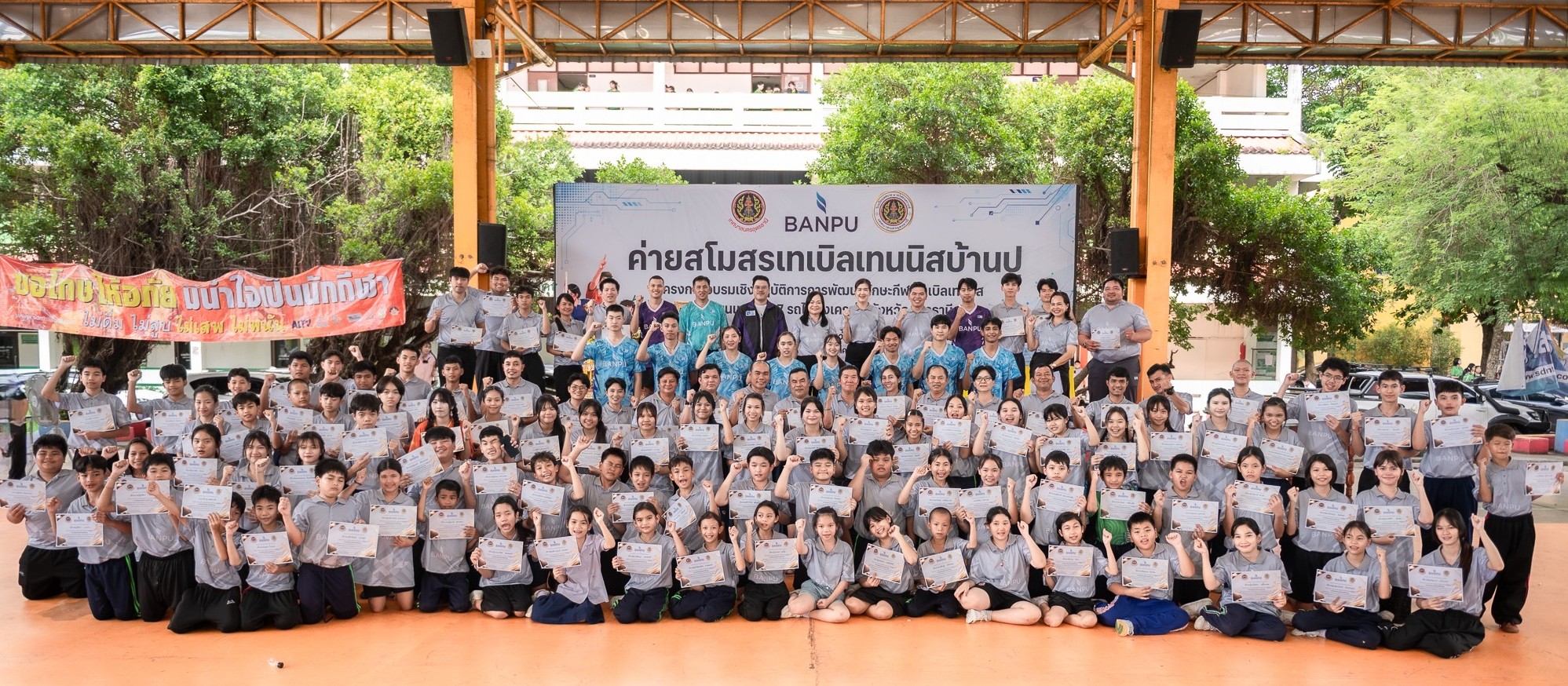
This commitment comes to life through the Banpu Table Tennis Club’s Remote Camp, which gives young people the opportunity to develop their table tennis skills while helping local teachers strengthen their coaching capabilities through standardized training. This year’s camp at Tessaban 7 Rotfai Songkhro School in Udon Thani created learning opportunities for teachers and a supportive environment for young people to develop their potential.

Behind this approach is the Banpu Table Tennis Club (BTTC), supported from Banpu Public Company Limited. For 18 years, BTTC has been developing people through table tennis. Its goal is not only to build skilled athletes but also to shape good people who give back by sharing their knowledge and creating opportunities for others.

This reflects the belief that meaningful development should create value beyond the individual. As athletes grow through the opportunities they receive, they can pass on what they have learned and help others grow in turn.

This year, the journey began with 30 teachers from schools under Udon Thani City Municipality who took part in the ITTF Banpu Table Tennis Level I course, a five-day introductory coaching program that is aligned with international standards. The course combined theoretical instruction, written examinations, and hands-on practice, covering coaching principles, playing techniques, training program design, and approaches to develop athletes in ways that fit their age and skill level. Participants then underwent an assessment for certification and recognition by the Table Tennis Association of Thailand. The training marked another important step in turning knowledge into more structured teaching. .
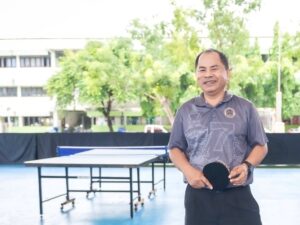
“This training helped us learn coaching principles and techniques that we can put into practice. Teachers can now pass on their knowledge to children more accurately and systematically. With a strong foundation, children can develop their skills further, whether they play for health, enjoyment, or hope to compete in the future,” said Mr. Khom Chanthawan, a Senior Professional Level Teacher at Tessaban 7 Rotfai Songkhro School and one of the training participants.

Table tennis coaching knowledge gives teachers a strong foundation for passing on the right skills to children. At the same time, teachers who stay close and attentive can follow each child’s progress over time. This helps them spot the child’s strength and encourage them to keep moving forward.
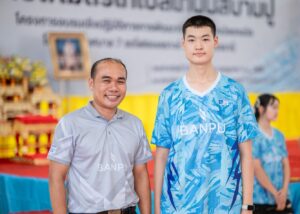
One example is Mr. Worawut Butta, known as “Kru Wut,” an assistant teacher at Tessaban 1 Pho Si School under Udon Thani City Municipality’s Department of Education, who helped “A-chai” or Thanakrit Eungmaneeprasert begin his sporting journey. Kru Wut encouraged A-chai to try different sports to discover his strengths. Recognizing A-chai’s potential in table tennis, Kru Wut invited him to train and looked for opportunities for him to compete, sharpen his skills, and gain real match experience. With his teacher’s support and his own dedication to training, A-chai went on to represent Udon Thani City Municipality. As his skills improved, he joined the Banpu Table Tennis Club and earned a place on Thailand’s national youth team last year.

“Children outside Bangkok have just as much potential as those in the city. They just don’t always have access to quality coaching. By developing the skills of teachers and coaches, we can build a stronger foundation for young athletes and we may see more young talent emerge from Udon Thani in the years ahead,” said Kru Wut.

Alongside the teacher training program, this year’s BTTC Remote Camp welcomed more than 100 young people from Udon Thani and nearby areas to train with national team coaches and experienced instructors. Participants were grouped by skill level, with sessions covering warm-up exercises, correct racket grip, and basic strokes.    The camp helped prepare young players for competition and brought their training up to standard.
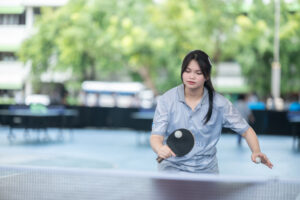
Miss Orawan Chubram known as “Mesa,” a Grade 9 student at Tessaban 7 Rotfai Songkhro School and one of the camp participants, shared her experience, “I learned new techniques and improved my basic skills. The coaches and senior athletes guided me closely, helping me understand what I needed to work on next. Besides improving my game, I learned about focus, discipline, and never giving up, which I can apply both in sports and in school”
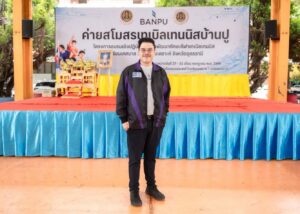
“What we hope to see after the camp isn’t just teachers receiving their certificates. It’s all 30 teachers taking what they have learned back to their schools and putting it into practice. By understanding each child’s interests and abilities, they can design training to help every child develop their skills to the fullest.” Mr. Rattapon Sukhunthee, Head of Corporate Communications at Banpu Public Company Limited, said.

The true value of the BTTC Remote Camp extends beyond the five days that brought together more than 130 teachers and young people on the court. It is what happens after everyone returns. As knowledge is passed on, it creates opportunities for children to discover and develop their abilities. This is the camp’s lasting contribution: using sport to nurture human potential.

###


About Banpu

Banpu Public Company Limited is a leading versatile energy company, operating across four business pillars under its Energy Symphonics Strategy: U.S. Closed-Loop Gas, Next-Gen Mining, Power+, and Future Tech – with operations across Asia Pacific and the United States. Banpu is committed to expanding the world’s energy capacity through reliable and responsible energy solutions that move the world toward a better future. For more information, visit www.banpu.com.

Tags :
For more information,
Please contact Banpu Corporate
Communications Team:
Kamolwan Chiamudom

093-923-6355

Chattida Veerakul 

092-881-0969

Solar Farm
Ponder Solar Farm
Texas

Operational

Capacity
(1Q26)

2.5
MW
Banpu Ownership : 100%
Gas-fired Power Plant (HELE/CCGT)
Temple I CCGT Power Plant
Texas

Operational

Installed
capacity
(1Q26)

768
MW
Banpu Ownership : 100%
Temple II CCGT Power Plant
Texas

Operational

Installed
capacity
(1Q26)

755
MW
Banpu Ownership : 100%
Shale Gas Site
Marcellus Shale
Pennsylvania

Operational

Reserves
(2025)

0.6
Tcfe 1P reserves
Banpu Ownership : 65.94%
Barnett Shale
Texas

Operational

Reserves
(2025)

5.5
Tcfe 1P reserves
Banpu Ownership : 65.94%
CCUS Project
Barnett Zero Project
Texas

Operational

Annual CO2
storage capacity
(2025)

183,000
t/yr
Cotton Cove Project
Texas

Operational

Annual CO2
storage capacity
(2025)

32,000
t/yr
CCUS Project
Eagle Ford Project
Southern Texas

Under Development

Annual CO2
storage capacity
(2025)

~90,000
t/yr
East Texas Project
Eastern Texas

Under Development

Annual CO2
storage capacity
(2025)

~70,000
t/yr
BESS Project
Megamouth BESS
Texas

Under Development

Capacity
(2025)

100
MW
200
MWh
Banpu Ownership : 100%
BESS Project
Iwate Tono BESS
Iwate

Operational

Capacity
(1Q26)

15
MW
58
MWh
Banpu Ownership : 75%
BESS Project
Aizu BESS
Fukushima

Under Development

Capacity
(2025)

26
MW
104
MWh
Banpu Ownership : 100%
Tsuno BESS
Miyazaki

Under Development

Capacity
(2025)

26
MW
104
MWh
Banpu Ownership : 70%
Kamigumi-Tokyo BESS
Tokyo

Under Development

Capacity
(2025)

2
MW
8
MWh
Banpu Ownership : 49%
Nikko BESS
Tochigi ​

Under Development

Capacity
(2025)

40
MW
160
MWh
Banpu Ownership : 100%
Hiyoshibaru BESS
Oita​

Under Development

Capacity
(2025)

20
MW
80
MWh
Banpu Ownership : 30%
Solar Power Plant
Olympia Solar
Gunma, Ibaraki and Tochigi

Operational

Capacity
(1Q26)

10
MW
Banpu Ownership : 40%
Yamagata Solar​
Yamagata

Operational

Capacity
(1Q26)

20
MW
Banpu Ownership : 100%
Kesennuma Solar
Miyagi

Operational

Capacity
(1Q26)

20
MW
Banpu Ownership : 100%
Shirakawa Solar​
Fukushima

Operational

Capacity
(1Q26)

10
MW
Banpu Ownership : 100%
Wind Project
Vinh Chau – Phase 1
Soc Trang Province

Under Development

Capacity
(2025)

30
MW
Banpu Ownership : 100%
Solar Power Plant
Nhon Hai Solar
Ninh Thuan Province

Operational

Capacity
(1Q26)

35
MW
Banpu Ownership : 100%
Wind Power Plant
El Wind Mui Dinh
Ninh Thuan Province

Operational

Capacity
(1Q26)

37.60
MW
Banpu Ownership : 100%
Coal Mine
Tsant Uul Mine
South Gobi Province

Operational

Production
(1Q26)

0.57
Mt

Reserves
(2025)

~63.5
Mt
Banpu Ownership : 100%
Coal Project
Unst Khudag Project
Central Gobi Province

Under Development

Reserves
(2025)

540.9
Mt
Banpu Ownership : 100%
Solar Farm
Beryl Solar Farm (BSF)
New South Wales

Operational

Capacity
(1Q26)

110.9
MW
Banpu Ownership : 100%
Manildra Solar Farm (MSF)
New South Wales

Operational

Capacity
(1Q26)

55.9
MW
Banpu Ownership : 100%
Port
NCIG Coal Terminal Port (Newcastle)

Operational

Coal export loading

Coal Mine
Airly Mine
New South Wales

Operational

Production
(1Q26)

0.1
Mt

Reserves
(2025)

13.5
Mt
Banpu Ownership : 100%
Springvale Mine
New South Wales

Operational

Production
(1Q26)

0.7
Mt

Reserves
(2025)

5.3
Mt
Banpu Ownership : 100%
Clarence Mine
New South Wales

Operational

Production
(1Q26)

0.3
Mt

Reserves
(2025)

24.7
Mt
Banpu Ownership : 100%
Mandalong Mine
New South Wales

Operational

Production
(1Q26)

0.5
Mt

Reserves
(2025)

43.9
Mt
Banpu Ownership : 100%
Myuna Mine
New South Wales

Operational

Production
(1Q26)

0.2
Mt

Reserves
(2025)

11.5
Mt
Banpu Ownership : 100%
Angus Place Mine
New South Wales

Care & Maintenance

On care & maintenance

Banpu Ownership : 100%
BESS Project
Wooreen BESS (WESS)
Victoria

Under Development

Capacity
(2025)

350
MW
1,400
MWh
Banpu Ownership : 50%
Kerang BESS
Victoria

Under Development

Capacity
(2025)

103
MW
206
MWh
Banpu Ownership : 100%
Coal Project
Newstan Extension Project
New South Wales

Under Development

Reserves
(2025)

51.5
Mt
Banpu Ownership : 100%
Neubecks Mine Project
New South Wales

Under Development

Reserves
(2025)

7.5
Mt
Banpu Ownership : 100%
Wallarah Mine Project
New South Wales

Under Development

Reserves
(2025)

7.8
Mt (equity basis)​
Banpu Ownership : 13.5%
Port
Bontang Coal Terminal
+ 4 ports

Operational

Export loading facility

Coal Project
NPR Mine Project
Central Kalimantan

Under Development

Reserves
(pre-development)

77.4
Mt
Banpu Ownership : 65.14%
Coal Mine
Indominco Mine
East Kalimantan

Operational

Production
(1Q26)

1.6
Mt

Reserves
(2025)

30.4
Mt
Banpu Ownership : 65.14%
Trubaindo Mine
East Kalimantan

Operational

Production
(1Q26)

0.7
Mt

Reserves
(2025)

50.2
Mt
Banpu Ownership : 65.14%
Bharinto Mine
North Barito

Operational

Production
(1Q26)

1.7
Mt

Reserves
(2025)

95.4
Mt
Banpu Ownership : 65.14%
Jorong Mine
South Kalimantan

Operational

Reserves
(2025)

2.3
Mt
Banpu Ownership : 65.14%
Graha Panca Karsa Mine (GPK)
East Kalimantan

Operational

Production
(1Q26)

0.5
Mt

Reserves
(2025)

99.1
Mt
Banpu Ownership : 65.14%
TIS Mine
East Kalimantan

Operational

Production
(1Q26)

0.1
Mt

Reserves
(2025)

7.2
Mt
Banpu Ownership : 65.14%
NPR Mine

Operational

Production
(1Q26)

0.1
Mt

Reserves
(2025)

77.4
Mt
Banpu Ownership : 65.14%
Thermal Power Plant
Hongsa Power Plant – HPC
Xayaboury Province

Operational

Installed Capacity
(1Q26)

1,878
MW
Banpu Ownership : 40%
Thermal Power Plant
BLCP Power Plant
Rayong Province

Operational

Installed Capacity
(1Q26)

1,434
MW
Banpu Ownership : 50%
Solar Project
Jinhu Qianfeng Solar
Jiangsu Province

Under Development

Capacity
(2025)

120
MW
Banpu Ownership : 10%
BESS Project
Jinhu Qianfeng BESS
Jiangsu Province

Under Development

Capacity
(2025)

10
MW
20
MWh
Banpu Ownership : 100%
Thermal Power Plants
Luannan CHP
Hebei Province

Operational

Capacity

150
MW

Steam

538
t/hr​
Banpu Ownership : 100%
Zhengding CHP
Hebei Province

Operational

Capacity

73
MW

Steam

370
t/hr​
Banpu Ownership : 100%
Zouping CHP
Shandong Province

Operational

Capacity

125
MW

Steam

600
t/hr​
Banpu Ownership : 70%
Shanxi Lu Guang (SLG) Power Plant​
Shanxi Province

Operational

Capacity

1,320
MW
Banpu Ownership : 30%
Solar Power Plant
Huineng Solar
Shandong Province

Operational

Capacity
(1Q26)

21.51
MW
Banpu Ownership : 100%
Jinshan Solar
Shandong Province

Operational

Capacity
(1Q26)

28.95
MW
Banpu Ownership : 100%
Haoyuan Solar
Shandong Province

Operational

Capacity
(1Q26)

20.00
MW
Banpu Ownership : 100%
Hui'en Solar
Shandong Province

Operational

Capacity
(1Q26)

19.70
MW
Banpu Ownership : 100%
Deyuan Solar
Zhejiang Province

Operational

Capacity
(1Q26)

51.64
MW
Banpu Ownership : 100%
Xingyu Solar
Shandong Province

Operational

Capacity
(1Q26)

10.30
MW
Banpu Ownership : 100%
Jixin Solar
Jiangsu Province

Operational

Capacity
(1Q26)

25.22
MW
Banpu Ownership : 100%
Coal Mine
Gaohe Mine
Shanxi Province

Operational

Production
(1Q26)

2.6
Mt

Reserves
(2025)

72.9
Mt
Banpu Ownership : 45%
Hebi Mine
Henan Province

Operational

Production
(1Q26)

0.3
Mt

Reserves
(2025)

40.6
Mt
Banpu Ownership : 40%

IR Contacts