
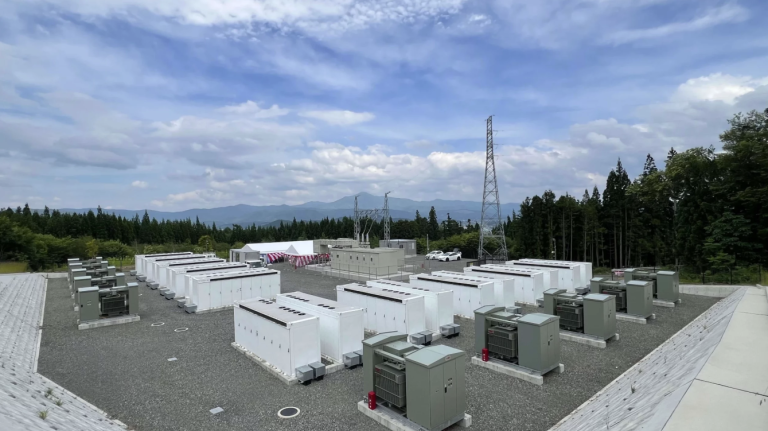
An In-Depth Look at BESS under Banpu’s Power+ Business Delivering Reliable Energy to Support AI-Driven Data Center Demand

In an era where AI technologies and data centers are expanding rapidly, global energy demand continues to increase, highlighting the need for energy systems that are stable, flexible, and able to respond to changing demand. As a result, Battery Energy Storage Systems (BESS) are playing an increasingly important role in modern energy infrastructure.

A rapidly growing BESS market and its role within Banpu’s Power+ business

The global BESS market reached USD 54 billion in 2024, representing a 36% increase from the previous year*. This reflects the growing role of BESS in enhancing grid stability and supporting renewable energy, as well as rising electricity demand.

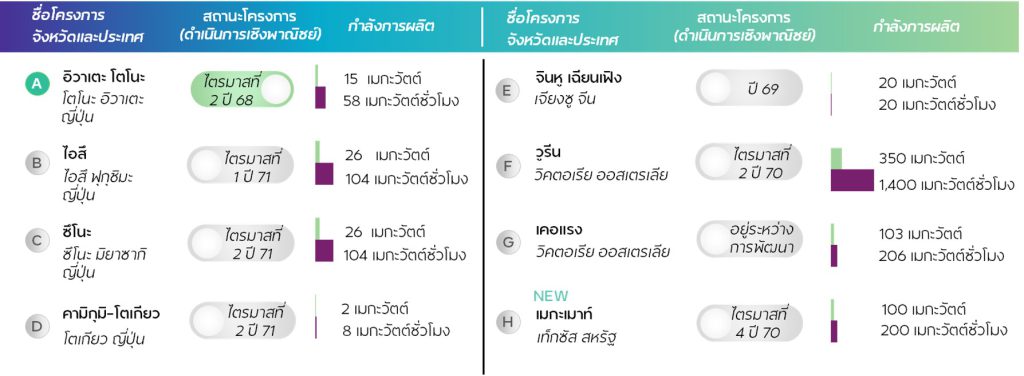
Banpu Public Company Limited began developing its BESS business in 2021, starting with an investment in Japan before gradually expanding to China, Australia, and the United States. Currently, the Company has a total of 8 BESS projects across four key countries, covering both operating and underdevelopment projects, with a total capacity of over 2,100 MWh. The Company continues to expand its investments in strong potential markets to support clean energy systems, contributing to long-term sustainable growth and greenhouse gas emissions reduction.

The expansion of these investments is part of the Energy Symphonics strategy under the Power+ business pillar, which focuses on power generation and related businesses. The Company operates through a Power Pure-Play Platforms, covering the entire electricity value chain by integrating baseload power, thermal power, renewable energy, BESS, and energy trading. This enables the Company to deliver energy reliably and continuously to business-to-business (B2B), business-to-government (B2G), and data center customers.
Expanding the BESS portfolio across three markets in the Asia-Pacific

Banpu focuses on expanding its BESS business in markets with favorable conditions, including renewable energy generation, liberalized electricity markets, and supportive government policies.

In China, the Company is developing the Jinhu Qianfeng solar power project, where BESS is deployed to manage solar generation, which varies throughout the day, particularly during periods of high output in daytime hours. BESS helps balance electricity supply and demand. The Jinhu Qianfeng project is expected to commence commercial operations in 2026. For Australia, the Wooreen and Kerang projects are currently under development and are expected to commence operations in the second half of 2027. Meanwhile, in Japan, Banpu has entered the BESS and energy trading market at a utility scale. This includes the Iwate Tono project, which is already in commercial operation, as well as the Aizu, Tsuno, and Kamigumi-Tokyo projects, which are expected to commence commercial operations in 2028. The Tokyo Metropolitan Government supports the Kamigumi-Tokyo project.

All projects operate in a merchant market structure, generating revenue from energy arbitrage, balancing market services, and the capacity market, using AI-driven energy management systems and advanced data analytics to enhance operational efficiency.
Houston is a strategic milestone in a high-demand energy market

The Megamouth project, Banpu’s first BESS project in the United States, is located in Houston, the country’s second-largest and rapidly growing BESS markets**. The project has a capacity of 100 MW with 200 MWh of energy storage and is connected to the grid operated by CenterPoint Energy. It operates in the ERCOT merchant market. This investment strengthens Banpu’s electricity value chain in the United States, from power generation and energy storage to energy trading.

The project generates revenue through energy price management across different periods, such as purchasing electricity during low-price periods and selling during high-price periods (Energy Arbitrage), as well as providing ancillary services that support grid stability. It also benefits from synergies with other energy assets within Banpu’s value chain, including gas-fired power plants, carbon capture and sequestration (CCUS) projects, and energy trading businesses. This enhances the operational performance of each asset, including cost management, revenue generation, and grid stability control, while improving agility in energy management and supporting electricity demand from data centers and the business sector.

Mr. Sinon Vongkusolkit, Chief Executive Officer of Banpu Public Company Limited, stated, “Banpu’s expansion of investments in Battery Energy Storage Systems (BESS) across strategic markets is an important step in enhancing the energy portfolio optimization in line with future energy trends. We are advancing a balance between the growth of renewable energy and the stability of power systems, while leveraging AI to strengthen real-time energy management capabilities. In addition, synergies with our existing assets enhance operational performance and expand opportunities for sustainable returns. Banpu is confident that investment in BESS not only supports the energy transition but also serves as a key foundation for creating value and building long-term investor confidence.

*ReferenceBNEF Energy Transition Investment Trends 2025

**ReferenceRabobank-Texas: A high-stakes frontier for US battery energy storage systems


###


About Banpu

Banpu Public Company Limited is a versatile energy company, operating across four business pillars under its Energy Symphonics Strategy: Next-Gen Mining, U.S. Closed-Loop Gas, Power+, and Future Tech – with operations in Thailand, Indonesia, China, Australia, Lao PDR, Mongolia, Japan, the United States of America, and Vietnam. The Company leads a responsible and sustainable energy transition by balancing reliable, affordable and sustainable energy.

Tags :
For more information,
Please contact Banpu Corporate
Communications Team:
Duangkamol Saleerat

061-446-6698

duangkamol_s@banpu.co.th

Thipanun Sukumalchart

065-094-5661

thipanun_s@banpu.co.th

Solar Farm
Ponder Solar Farm
Texas

Operational

Capacity
(1Q26)

2.5
MW
Banpu Ownership : 100%
Gas-fired Power Plant (HELE/CCGT)
Temple I CCGT Power Plant
Texas

Operational

Installed
capacity
(1Q26)

768
MW
Banpu Ownership : 100%
Temple II CCGT Power Plant
Texas

Operational

Installed
capacity
(1Q26)

755
MW
Banpu Ownership : 100%
Shale Gas Site
Marcellus Shale
Pennsylvania

Operational

Reserves
(2025)

0.6
Tcfe 1P reserves
Banpu Ownership : 65.94%
Barnett Shale
Texas

Operational

Reserves
(2025)

5.5
Tcfe 1P reserves
Banpu Ownership : 65.94%
CCUS Project
Barnett Zero Project
Texas

Operational

Annual CO2
storage capacity
(2025)

183,000
t/yr
Cotton Cove Project
Texas

Operational

Annual CO2
storage capacity
(2025)

32,000
t/yr
CCUS Project
Eagle Ford Project
Southern Texas

Under Development

Annual CO2
storage capacity
(2025)

~90,000
t/yr
East Texas Project
Eastern Texas

Under Development

Annual CO2
storage capacity
(2025)

~70,000
t/yr
BESS Project
Megamouth BESS
Texas

Under Development

Capacity
(2025)

100
MW
200
MWh
Banpu Ownership : 100%
BESS Project
Iwate Tono BESS
Iwate

Operational

Capacity
(1Q26)

15
MW
58
MWh
Banpu Ownership : 75%
BESS Project
Aizu BESS
Fukushima

Under Development

Capacity
(2025)

26
MW
104
MWh
Banpu Ownership : 100%
Tsuno BESS
Miyazaki

Under Development

Capacity
(2025)

26
MW
104
MWh
Banpu Ownership : 70%
Kamigumi-Tokyo BESS
Tokyo

Under Development

Capacity
(2025)

2
MW
8
MWh
Banpu Ownership : 49%
Nikko BESS
Tochigi ​

Under Development

Capacity
(2025)

40
MW
160
MWh
Banpu Ownership : 100%
Hiyoshibaru BESS
Oita​

Under Development

Capacity
(2025)

20
MW
80
MWh
Banpu Ownership : 30%
Solar Power Plant
Olympia Solar
Gunma, Ibaraki and Tochigi

Operational

Capacity
(1Q26)

10
MW
Banpu Ownership : 40%
Yamagata Solar​
Yamagata

Operational

Capacity
(1Q26)

20
MW
Banpu Ownership : 100%
Kesennuma Solar
Miyagi

Operational

Capacity
(1Q26)

20
MW
Banpu Ownership : 100%
Shirakawa Solar​
Fukushima

Operational

Capacity
(1Q26)

10
MW
Banpu Ownership : 100%
Wind Project
Vinh Chau – Phase 1
Soc Trang Province

Under Development

Capacity
(2025)

30
MW
Banpu Ownership : 100%
Solar Power Plant
Nhon Hai Solar
Ninh Thuan Province

Operational

Capacity
(1Q26)

35
MW
Banpu Ownership : 100%
Wind Power Plant
El Wind Mui Dinh
Ninh Thuan Province

Operational

Capacity
(1Q26)

37.60
MW
Banpu Ownership : 100%
Coal Mine
Tsant Uul Mine
South Gobi Province

Operational

Production
(1Q26)

0.57
Mt

Reserves
(2025)

~63.5
Mt
Banpu Ownership : 100%
Coal Project
Unst Khudag Project
Central Gobi Province

Under Development

Reserves
(2025)

540.9
Mt
Banpu Ownership : 100%
Solar Farm
Beryl Solar Farm (BSF)
New South Wales

Operational

Capacity
(1Q26)

110.9
MW
Banpu Ownership : 100%
Manildra Solar Farm (MSF)
New South Wales

Operational

Capacity
(1Q26)

55.9
MW
Banpu Ownership : 100%
Port
NCIG Coal Terminal Port (Newcastle)

Operational

Coal export loading

Coal Mine
Airly Mine
New South Wales

Operational

Production
(1Q26)

0.1
Mt

Reserves
(2025)

13.5
Mt
Banpu Ownership : 100%
Springvale Mine
New South Wales

Operational

Production
(1Q26)

0.7
Mt

Reserves
(2025)

5.3
Mt
Banpu Ownership : 100%
Clarence Mine
New South Wales

Operational

Production
(1Q26)

0.3
Mt

Reserves
(2025)

24.7
Mt
Banpu Ownership : 100%
Mandalong Mine
New South Wales

Operational

Production
(1Q26)

0.5
Mt

Reserves
(2025)

43.9
Mt
Banpu Ownership : 100%
Myuna Mine
New South Wales

Operational

Production
(1Q26)

0.2
Mt

Reserves
(2025)

11.5
Mt
Banpu Ownership : 100%
Angus Place Mine
New South Wales

Care & Maintenance

On care & maintenance

Banpu Ownership : 100%
BESS Project
Wooreen BESS (WESS)
Latrobe Valley

Under Development

Capacity
(2025)

350
MW
1,400
MWh
Banpu Ownership : 50%
Kerang BESS
Latrobe Valley

Under Development

Capacity
(2025)

103
MW
206
MWh
Banpu Ownership : 100%
Coal Project
Newstan Extension Project
New South Wales

Under Development

Reserves
(2025)

51.5
Mt
Banpu Ownership : 100%
Neubecks Mine Project
New South Wales

Under Development

Reserves
(2025)

7.5
Mt
Banpu Ownership : 100%
Wallarah Mine Project
New South Wales

Under Development

Reserves
(2025)

7.8
Mt (equity basis)​
Banpu Ownership : 13.5%
Port
Bontang Coal Terminal
+ 4 ports

Operational

Export loading facility

Coal Project
NPR Mine Project
Central Kalimantan

Under Development

Reserves
(pre-development)

77.4
Mt
Banpu Ownership : 65.14%
Coal Mine
Indominco Mine
East Kalimantan

Operational

Production
(1Q26)

1.6
Mt

Reserves
(2025)

30.4
Mt
Banpu Ownership : 65.14%
Trubaindo Mine
East Kalimantan

Operational

Production
(1Q26)

0.7
Mt

Reserves
(2025)

50.2
Mt
Banpu Ownership : 65.14%
Bharinto Mine
North Barito

Operational

Production
(1Q26)

1.7
Mt

Reserves
(2025)

95.4
Mt
Banpu Ownership : 65.14%
Jorong Mine
South Kalimantan

Operational

Reserves
(2025)

2.3
Mt
Banpu Ownership : 65.14%
Graha Panca Karsa Mine (GPK)
East Kalimantan

Operational

Production
(1Q26)

0.5
Mt

Reserves
(2025)

99.1
Mt
Banpu Ownership : 65.14%
TIS Mine
East Kalimantan

Operational

Production
(1Q26)

0.1
Mt

Reserves
(2025)

7.2
Mt
Banpu Ownership : 65.14%
NPR Mine

Operational

Production
(1Q26)

0.1
Mt

Reserves
(2025)

77.4
Mt
Banpu Ownership : 65.14%
Thermal Power Plant
Hongsa Power Plant – HPC
Xayaboury Province

Operational

Installed Capacity
(1Q26)

1,878
MW
Banpu Ownership : 40%
Thermal Power Plant
BLCP Power Plant
Rayong Province

Operational

Installed Capacity
(1Q26)

1,434
MW
Banpu Ownership : 50%
Solar Project
Jinhu Qianfeng Solar
Jiangsu Province

Under Development

Capacity
(2025)

120
MW
Banpu Ownership : 10%
BESS Project
Jinhu Qianfeng BESS
Jiangsu Province

Under Development

Capacity
(2025)

10
MW
20
MWh
Banpu Ownership : 100%
Thermal Power Plants
Luannan CHP
Hebei Province

Operational

Capacity
(1Q26)

246
MW

Steam
(1Q26)

538
t/hr​
Banpu Ownership : 100%
Zhengding CHP
Hebei Province

Operational

Capacity
(1Q26)

139
MW

Steam
(1Q26)

370
t/hr​
Banpu Ownership : 100%
Zouping CHP
Shandong Province

Operational

Capacity
(1Q26)

223
MW

Steam
(1Q26)

600
t/hr​
Banpu Ownership : 70%
Shanxi Lu Guang (SLG) Power Plant​
Shanxi Province

Operational

Capacity
(1Q26)

1,320
MW
Banpu Ownership : 30%
Solar Power Plant
Huineng Solar
Shandong Province

Operational

Capacity
(1Q26)

21.51
MW
Banpu Ownership : 100%
Jinshan Solar
Shandong Province

Operational

Capacity
(1Q26)

28.95
MW
Banpu Ownership : 100%
Haoyuan Solar
Shandong Province

Operational

Capacity
(1Q26)

20.00
MW
Banpu Ownership : 100%
Hui'en Solar
Shandong Province

Operational

Capacity
(1Q26)

19.70
MW
Banpu Ownership : 100%
Deyuan Solar
Zhejiang Province

Operational

Capacity
(1Q26)

51.64
MW
Banpu Ownership : 100%
Xingyu Solar
Shandong Province

Operational

Capacity
(1Q26)

10.30
MW
Banpu Ownership : 100%
Jixin Solar
Jiangsu Province

Operational

Capacity
(1Q26)

25.22
MW
Banpu Ownership : 100%
Coal Mine
Gaohe Mine
Shanxi Province

Operational

Production
(1Q26)

2.6
Mt

Reserves
(2025)

72.9
Mt
Banpu Ownership : 45%
Hebi Mine
Henan Province

Operational

Production
(1Q26)

0.3
Mt

Reserves
(2025)

40.6
Mt
Banpu Ownership : 40%

IR Contacts